




Our Mission
To Fund New Ideas at Their Inception
The Society’s mission is to support new ideas in glaucoma treatments and an eventual cure at their inception by providing grants to innovative Canadian research projects.
Each year we invite medical practitioners, scientists and researchers from universities, hospitals and private practice to apply for grants to conduct research in glaucoma through a call for submissions between November and December. These submissions are forwarded to a large team of medical and scientific professionals for evaluation and scoring against a set of criteria. This is known as a peer-review process and usually takes 2 to 3 months to complete. Each research proposal is evaluated by at least 2 reviewers. They are then ranked and recommendations are forwarded to our highly regarded Scientific Advisory Committee, chaired by Dr. Trope. The Committee reviews the recommendations for the Society which awards research grants to the top ranked proposal based on the funds available for grants in that year.
The Society’s independently judged, peer-reviewed research grants are highly valued by researchers and considered important and prestigious within the scientific community.
The Society has funded research projects by most of Canada’s top glaucoma researchers – doctors and scientists interested in finding new treatments and in preventing blindness from glaucoma. These highly respected researchers are recognized across Canada and internationally.
Funds Raised Goes to Researchers Throughout Canada
The Glaucoma Research Society of Canada is the only Canadian non-profit organization solely dedicated to funding glaucoma research. Since starting in 1989 and up to 2026, the Society has awarded more than six million dollars in grants to support more than 350 research projects. The Society funds 10 to 15% of all independent glaucoma research in Canada.
Sound governance, a volunteer board, and low administration costs ensure that as much funds raised by the Society go directly to Canadian researchers.
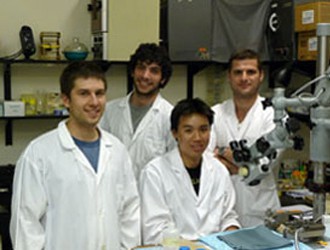 Alexandre Ball and his team of researchers
Your donations have funded numerous scientists who have gained international respect and reputations in advancing research into glaucoma.
The next decade should see some important breakthroughs including methods to maintain and possibly even repair damaged optic nerves in glaucoma.
Your support is essential to continue this valuable and much needed research.
Research Grant Applications
Researchers into glaucoma from across Canada apply annually for funding. Independent peers review the applications under the guidance of the Scientific Advisory Committee of renowned ophthalmologists and scientists from across the country. The Committee makes funding recommendations to the Society’s Board of Directors.